


A conversation with Paolo Nardi Fernandez and Max Pangerl about Sumbios 0.
“At its core, it all comes down to one word that defines really what we’re building, which is symbiosis,” Paolo Nardi Fernandez told me. He is co-founder of Sumbios.ai, and the name itself is a statement of intent: sumbios is the ancient Greek root of symbiosis, meaning “living together.” It’s a name that quietly insists that life is relational.
Three years ago, Paolo and Maximilian Pangerl were sitting on a couch talking about life, relationships and memory. What emerged from that conversation has become Sumbios — a platform that aspires to be nothing less than an operating system for human networks. And the problem they’re tackling is one that every network weaver, community builder and ecosystem connector knows intimately.
I recently sat down with co-founders Paolo and Max to get a demo of Sumbios 0, the first iteration of what they’re building. Paolo is a Sustainability Innovation Fusionist, Digital Ethicist and AI Change Agent based in Malmö, Sweden, with a background in computer science and leadership for sustainability. Max studied leadership for sustainability (where he and Paolo) and has a background in renewable energy and entrepreneurship, with a focus on circular economies.
Together they’re creating something that feels both obvious and radical at the same time.
Your Network is Locked Away From You
Despite the rise of alternative professional networking platforms like Planetir, LinkedIn is still the professional network for most people.
If you’re a LinkedIn user, it owns your network. Years — maybe decades — of relationships. The web of your professional life is all there... Every connection and conversation a harvestable data point for parent company Microsoft to do whatever dark arts it wants to.
Your professional network is a source of power. And yet on LinkedIn you can’t really see it, let alone work with it. It’s almost like they don’t want you to see the true power of your network...
You can’t ask LinkedIn “who in my network has experience with regenerative agriculture and lives in Northern Europe?” You can’t visualize when your connections formed and what that pattern reveals about your life trajectory. You can’t see the skills distribution across your network, or the overlap between your connections and a collaborator’s.
All of that richness — the relational power sitting inside your web of connections — is locked behind a platform whose business model is optimized for keeping you scrolling, not for helping you actually use your network.
The Tour: Sumbios 0
Paolo took me through the platform, named Sumbios “0” (as in zero), and what I saw was really impressive, especially for an early beta. At its core, Sumbios helps you see your network through different lenses: industry, company, skills, seniority, employment type, location... The AI layer makes all of this searchable through natural language, viewable as a list or a network graph.
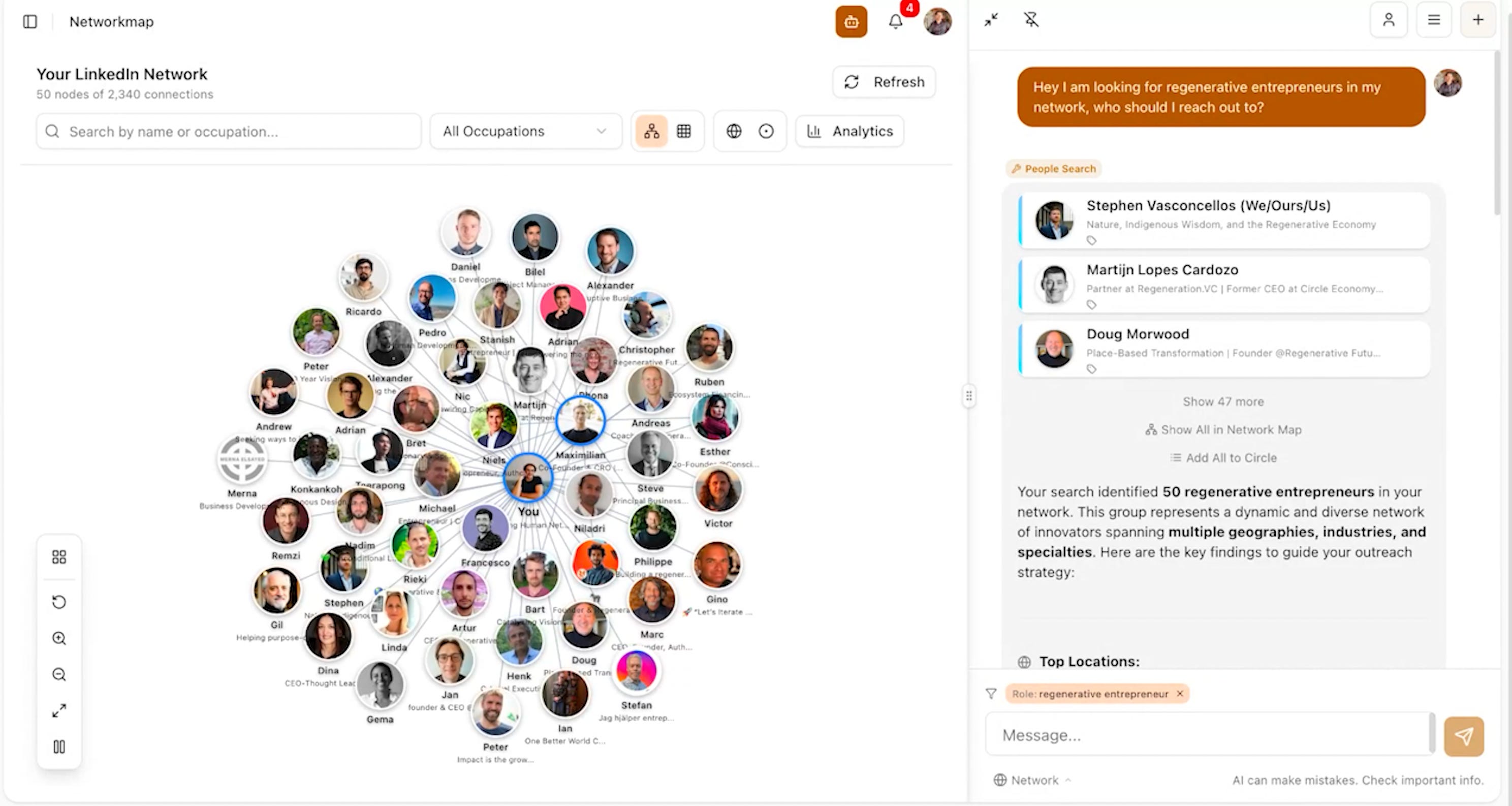
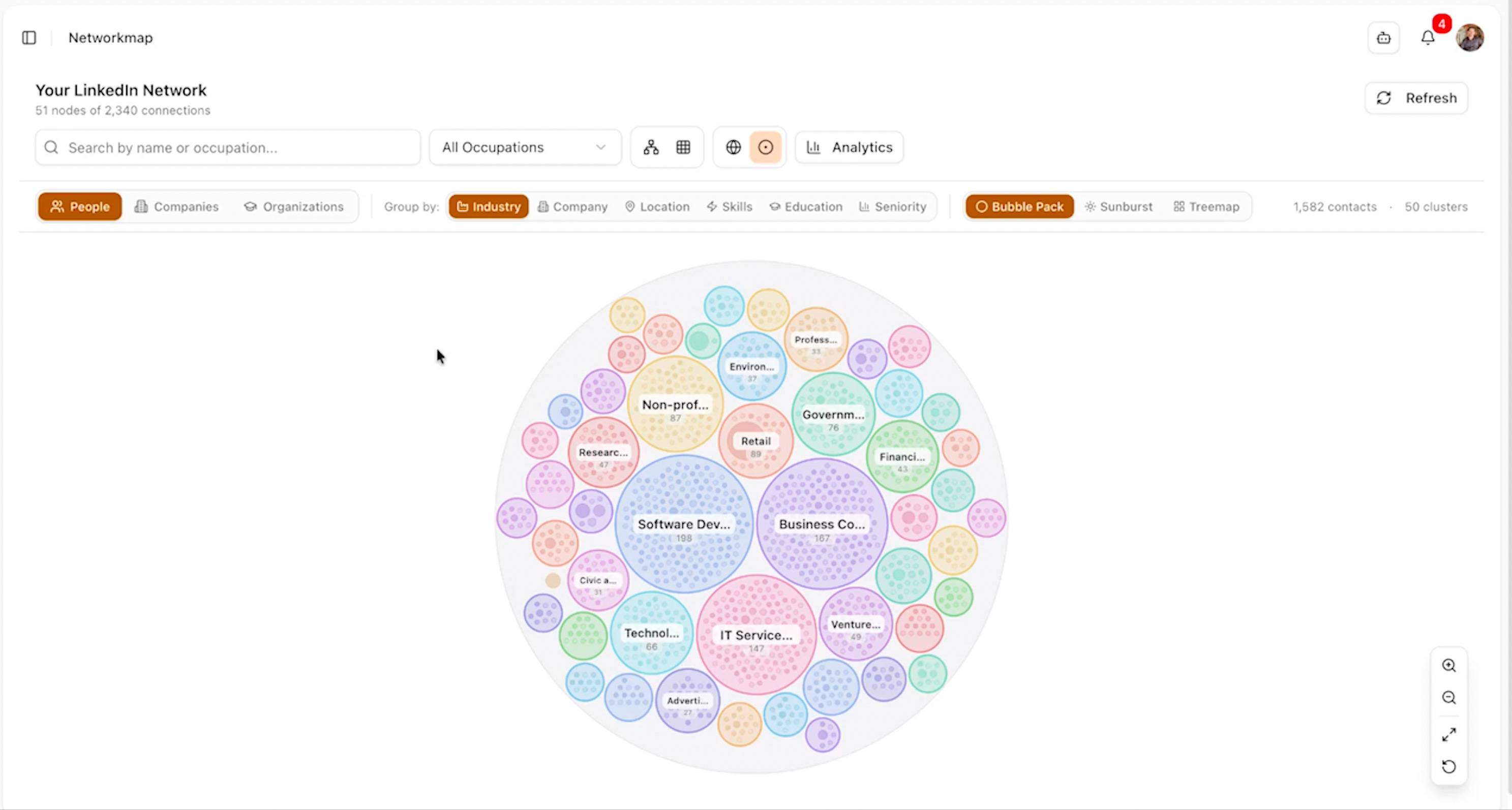
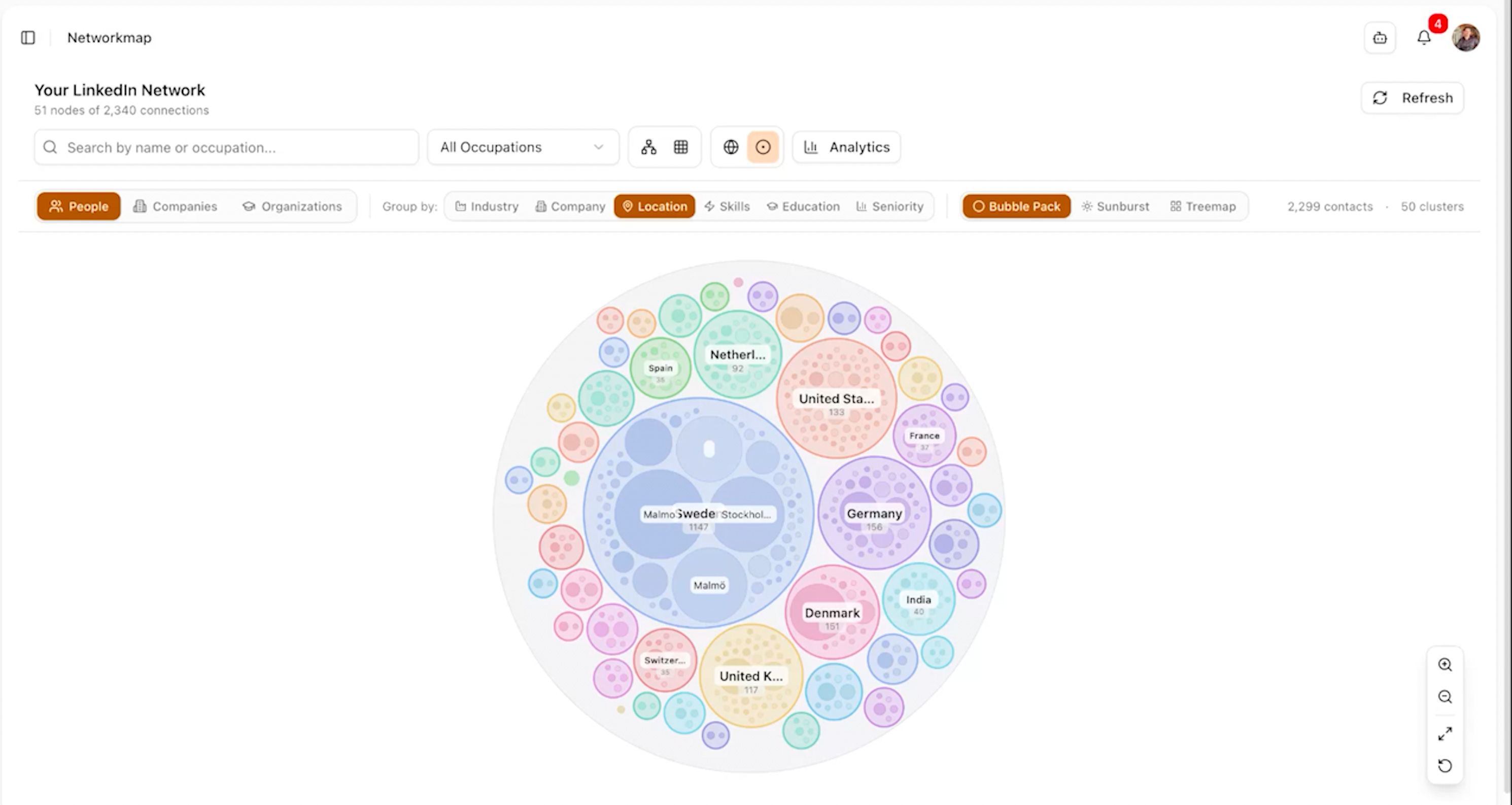
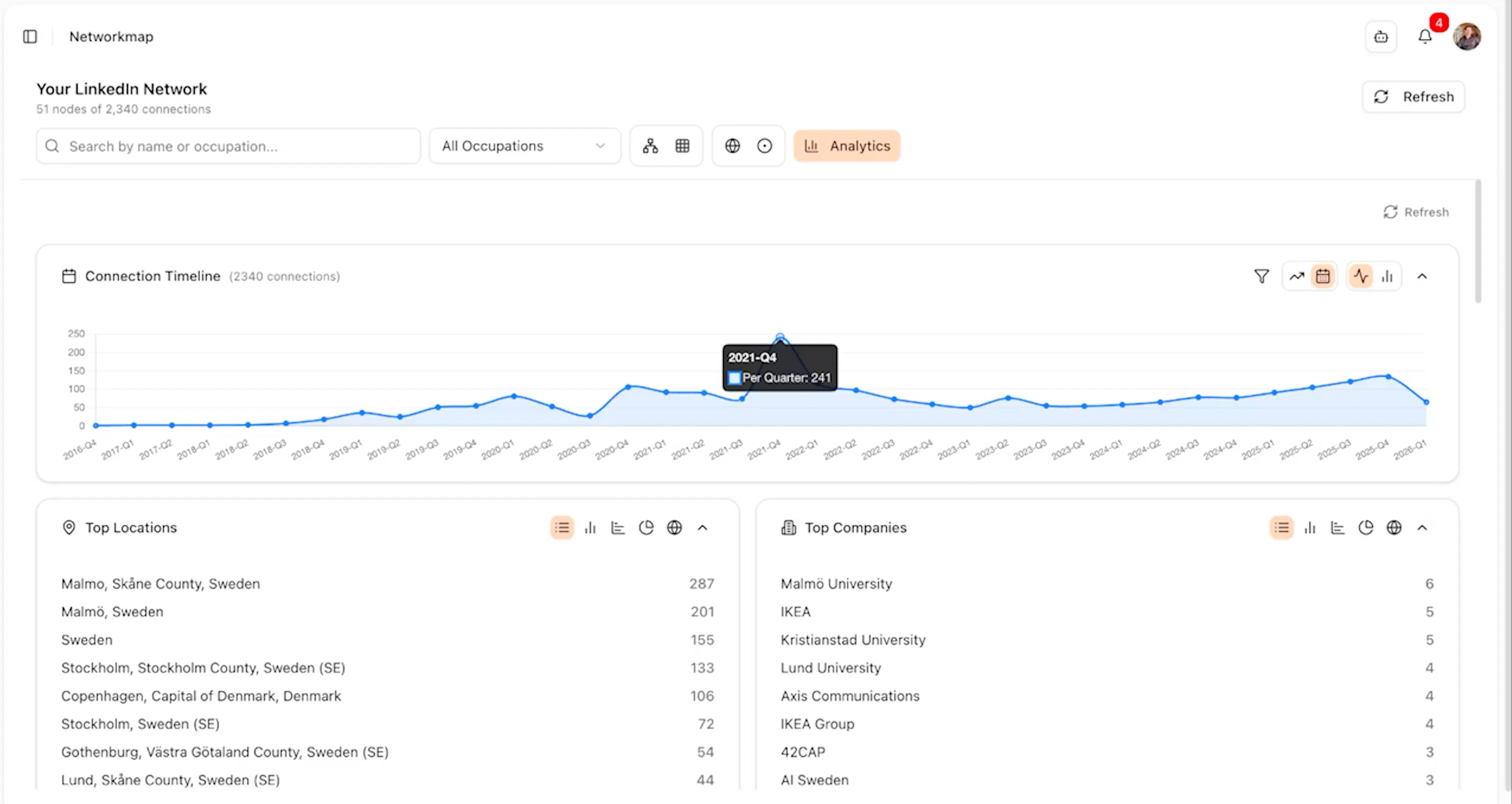
You can also visualize your connection timeline — how your network has grown year by year. “Our networks tell a story,” Paolo said. You can trace your professional evolution through the shape of who you’ve connected with and when.
For any connection, you can add notes — not just contact info, but the context of your relationship: what you talked about, what project they’re working on, what you want to follow up on... All this now becomes searchable context as a relational journal — a place where the texture of your connections gets saved. The vision extends further: they plan to integrate email, calendar and other platforms so that the relational memory builds automatically over time.
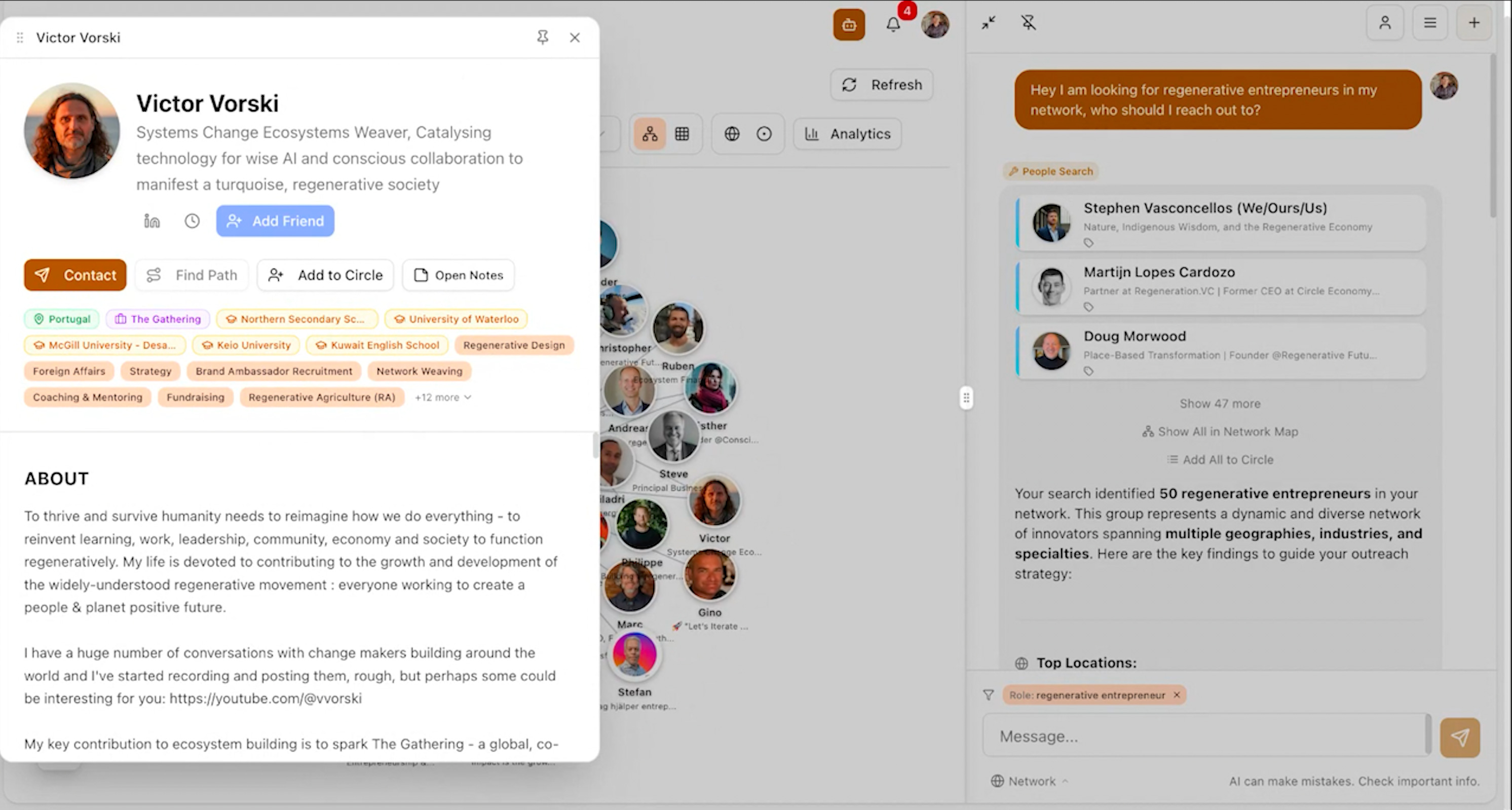
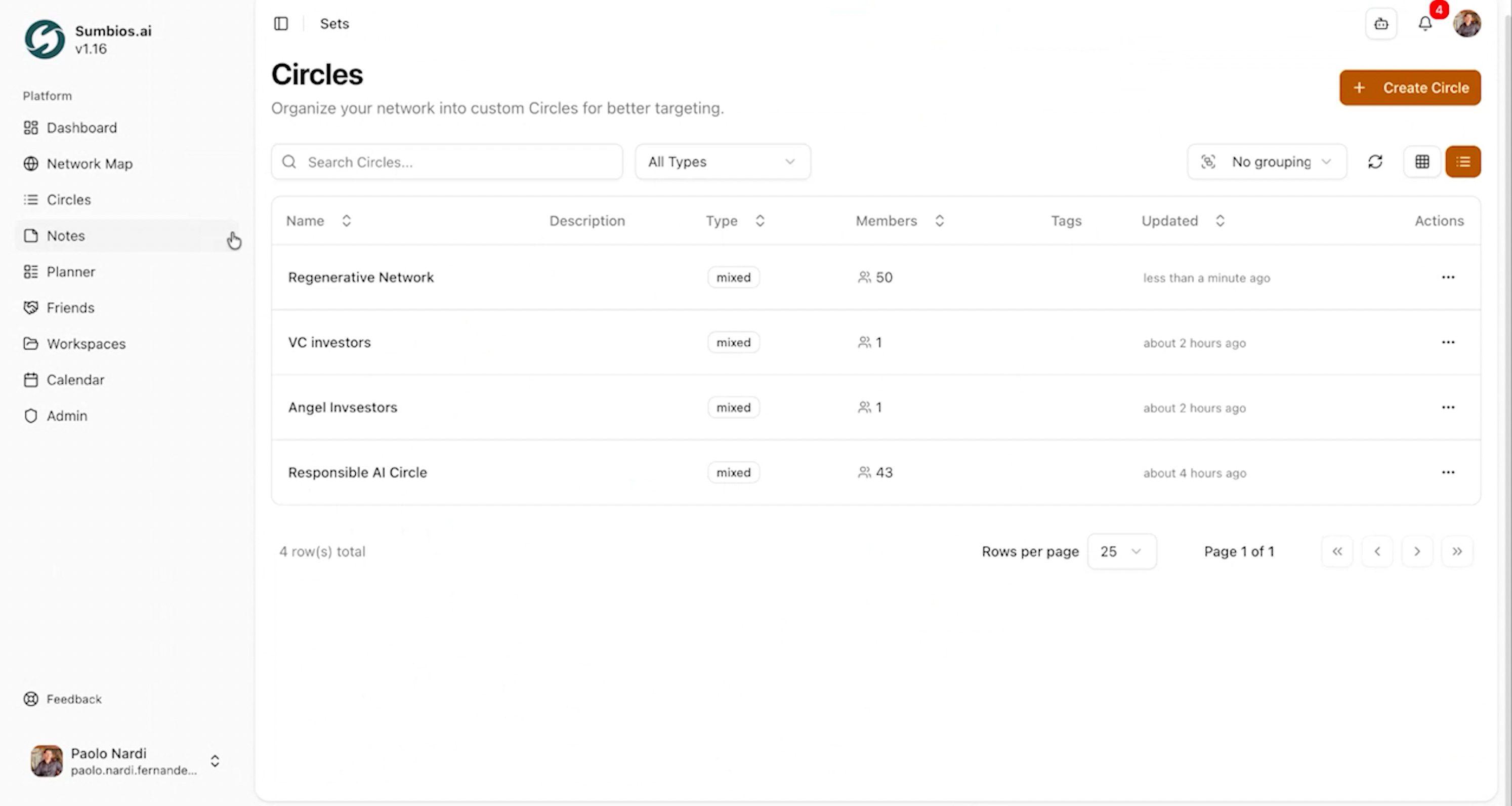
Circles let you group connections into ecosystems that matter to you — newsletter subscribers, potential investors, people you’ve met in person versus those who are purely online connections. That last distinction is one I find especially valuable, since I’m definitely guilty of accepting LinkedIn connection requests from people I’ve never met and have no idea who they even are, just to expand the reach of my network.
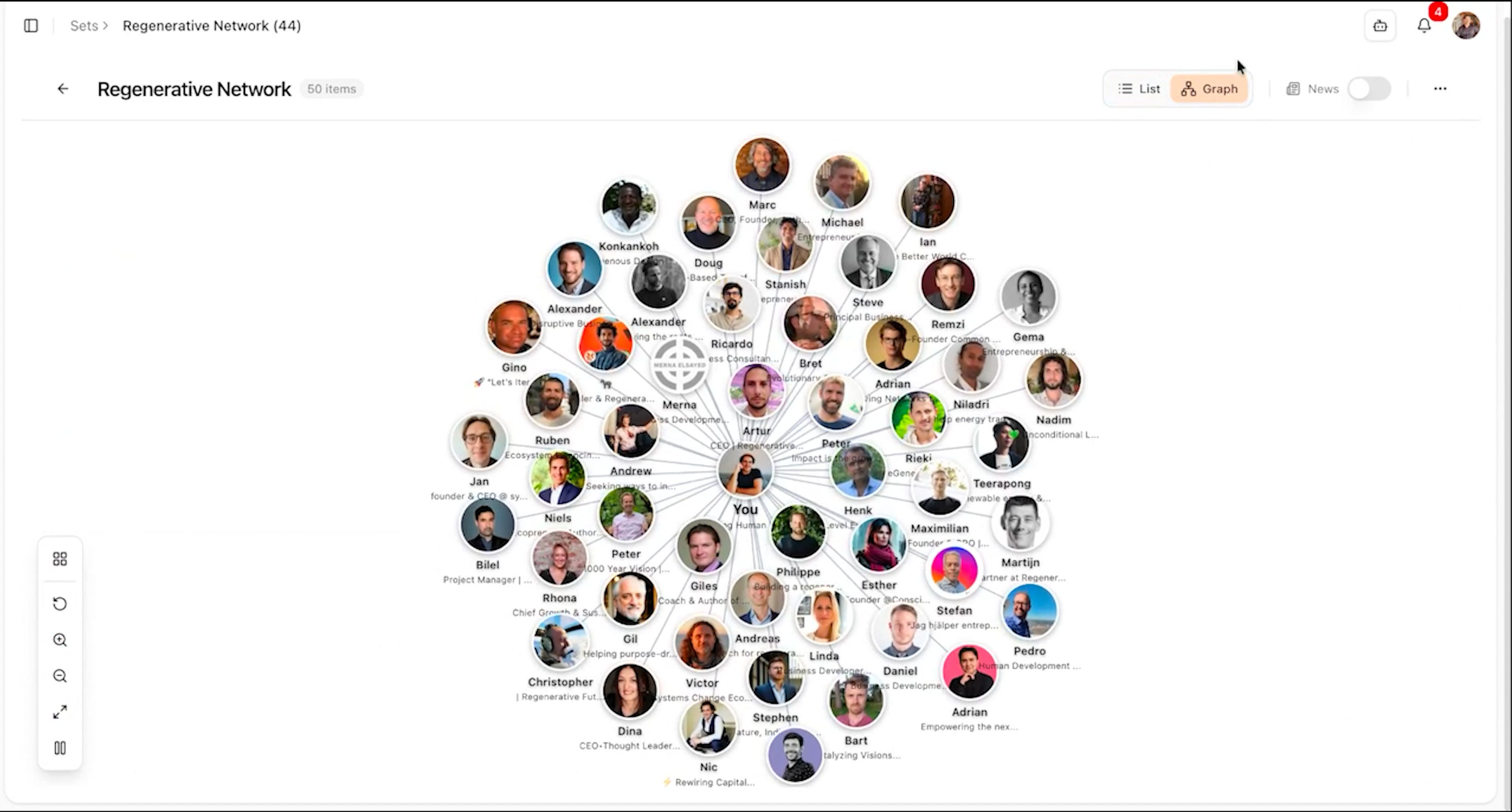
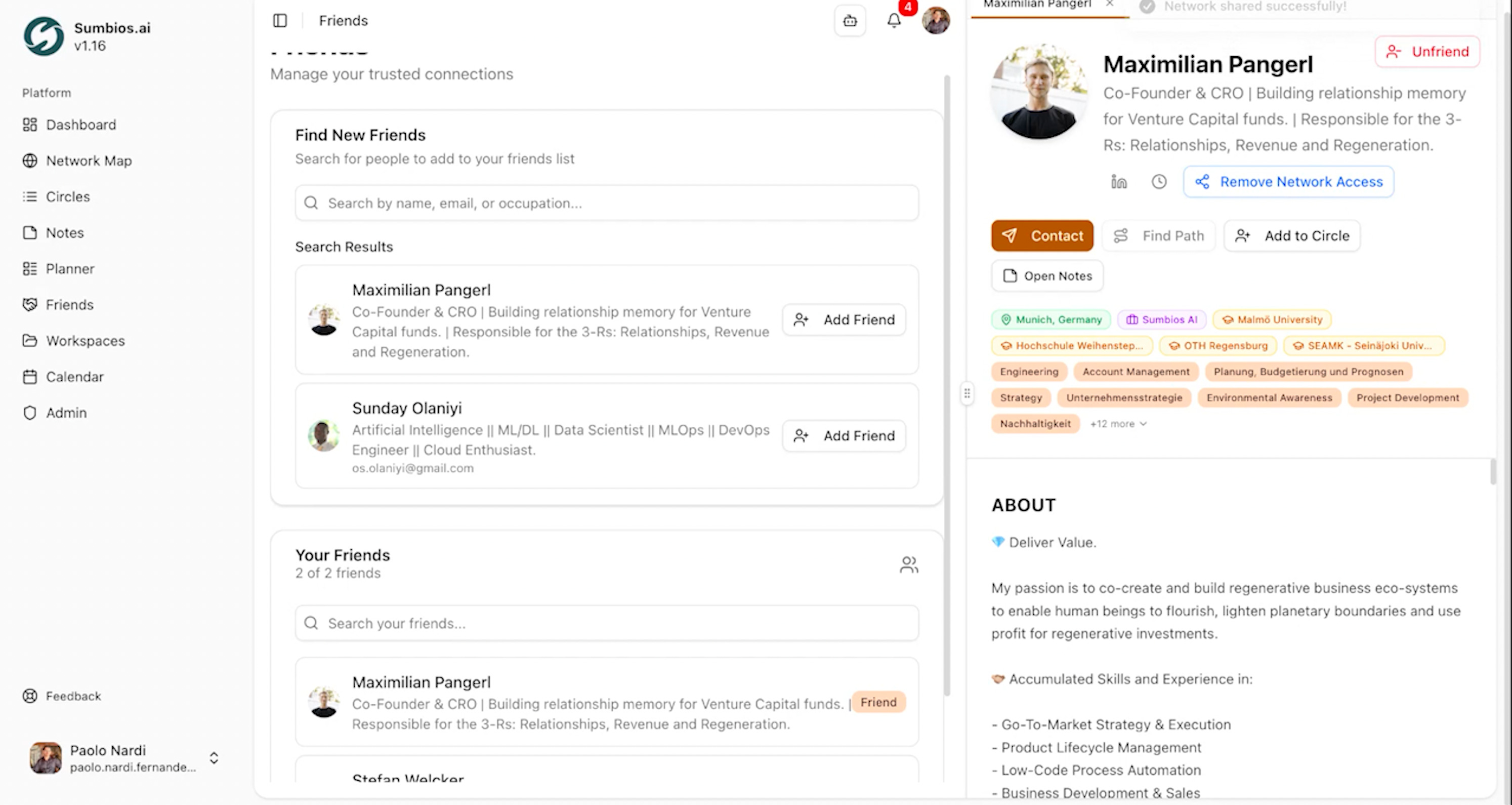
Collective Networks is the feature that solves LinkedIn’s “accept strangers to expand reach” problem. On Sumbios, you can choose to share your network with others on the platform. Suddenly you can search across their connections and vice versa. This cross-network visibility is a game-changer... It shows us the power of our collective networks. It’s the thing LinkedIn should have built years ago but never will, because their business model doesn’t incentivize it.
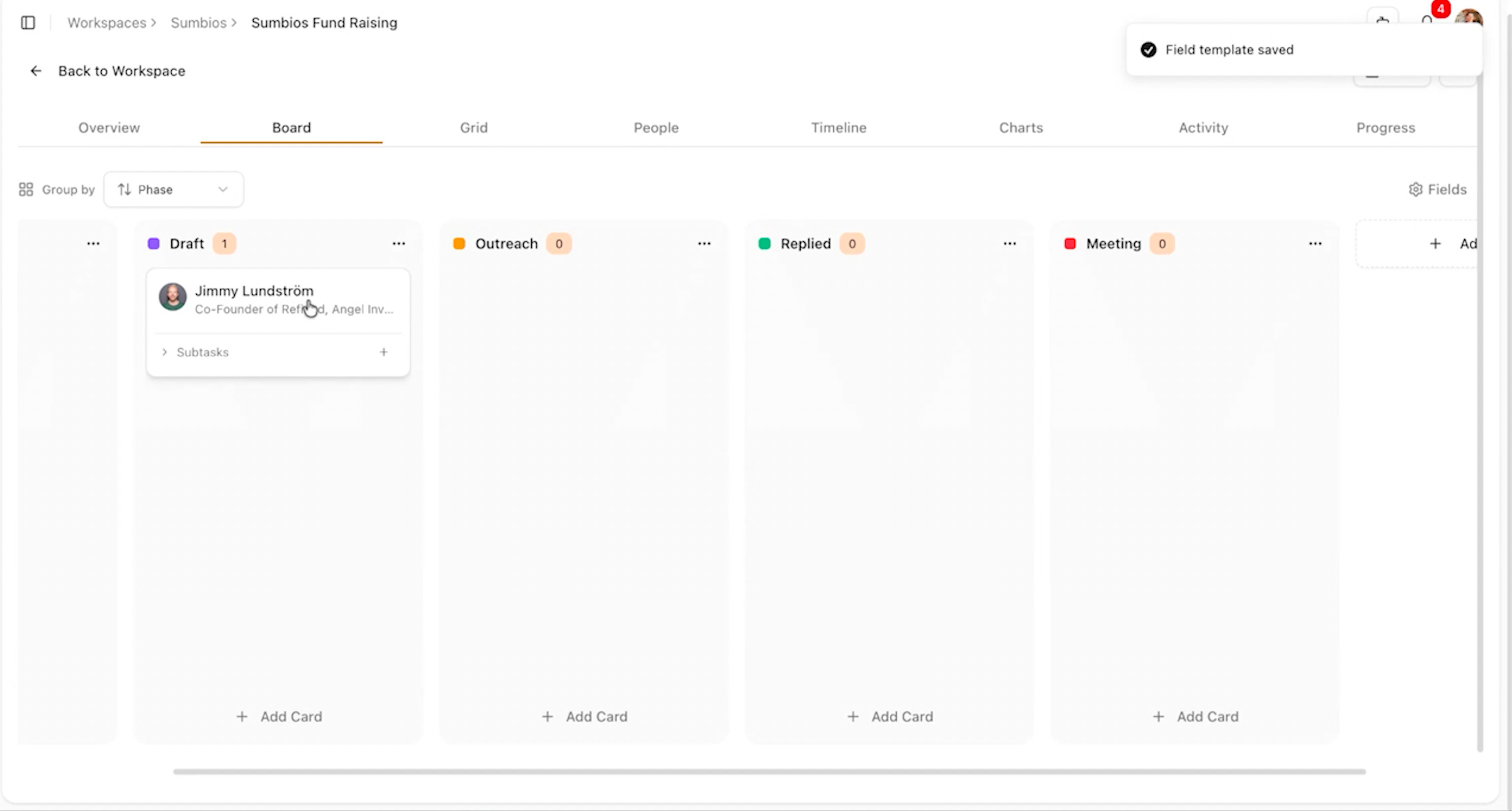
Missions round out the current feature set with a project management layer for network activation. You define what you’re trying to achieve — fundraising, team building, partnership development — and the system continuously recommends relevant people from your network and your friends’ networks who might help. You can track outreach status, add custom fields, set tasks and reminders, and move people through your process like cards on a board. It’s where the platform becomes not just a map of your connections but an active assistant helping you achieve specific goals through your relationships.
A Coordination Layer, Not an Extraction Layer
After the demo, what I told Max and Paolo was that this felt “so obvious” — like, why doesn’t this exist already? And they had a clear answer.
“The reason why current tech providers don’t do this is because their business model is not built for this,” Paolo explained. “Their business model is to optimize attention and retention.”
Max said something that really stuck with me: “we’re building this with intention, not just for attention.” That’s not just a tagline. It’s a direct challenge to the business model that powers every major social platform.
This isn’t just idealism. It’s a design philosophy with real technical implications. Max described their approach to privacy and data sovereignty: “Not even our CTO can look into what you’re doing on the platform because it’s encrypted.”
Everything is hosted and stored in the EU. Your data is genuinely yours. And when I asked about data portability — something close to my heart — Max said that every circle you create can be downloaded as a CSV or markdown file with one click. “100% there,” he said. Your data doesn’t just belong to you in theory. You can actually take it and leave.
“We’re a coordination layer,” Paolo said. “Not an extraction layer.”
That single line might be the best summary of what makes Sumbios different. In a world where most platforms are designed to capture and monetize your attention, Sumbios is designed to help you actually use your network — and then let you take your data and go if you want to.
In the companion post, I go deeper into the technical architecture Paolo described — the five layers of the “connector brain,” the mycelium metaphor for how Sumbios wants to sit across all your existing tools, the agentic roadmap, their vision for collective intelligence, and what Max and Paolo are looking for as they raise their angel round. I also share their beautiful answers to my question about what this looks like in two to three years when it’s mature.
Subscribe to access the full deep dive, and to support the Wiznerd Network’s work surfacing the tools and builders creating what comes next.
Want to explore Sumbios? Visit sumbios.ai or reach out directly to Max to schedule a demo. They’re currently onboarding 20-50 beta users and building with them intentionally — “for people, with people, for life.”
Have thoughts on relational intelligence and network operating systems? I’d love to hear them in the comments.
About this post: This is based on a February 2026 demo and conversation with Paolo Nardi Fernandez and Maximilian Pangerl. Sumbios is in active development and features may have evolved since this writing. All views are my own based on my understanding of the platform and the needs I see in regenerative communities.


